







Image processing software is not only used to automate inspections, but also serves as an important foundation for stabilizing on-site quality, reducing variations in judgment, and easing the burden on workers. At Katotech, we carefully organize inspection processes and judgment conditions, and propose image processing systems that can be used in actual situations.
Recently, in addition to traditional rule-based processing, there has been increasing interest in inspection, character recognition, classification, and anomaly detection that combine AI and deep learning. However, it is not just a matter of replacing everything with AI; it is important to choose a method that takes into account stability, ease of explanation, and operational costs. At Katotech, we value the idea of using the appropriate technology for the necessary areas.
Inspection process issues may be solved with just cameras and lighting, or may require jigs, transportation, PLC coordination, history management, and even operation screens. At Katotech, we proceed with systemization by looking at the overall picture that fits into on-site operations, rather than focusing on individual software.
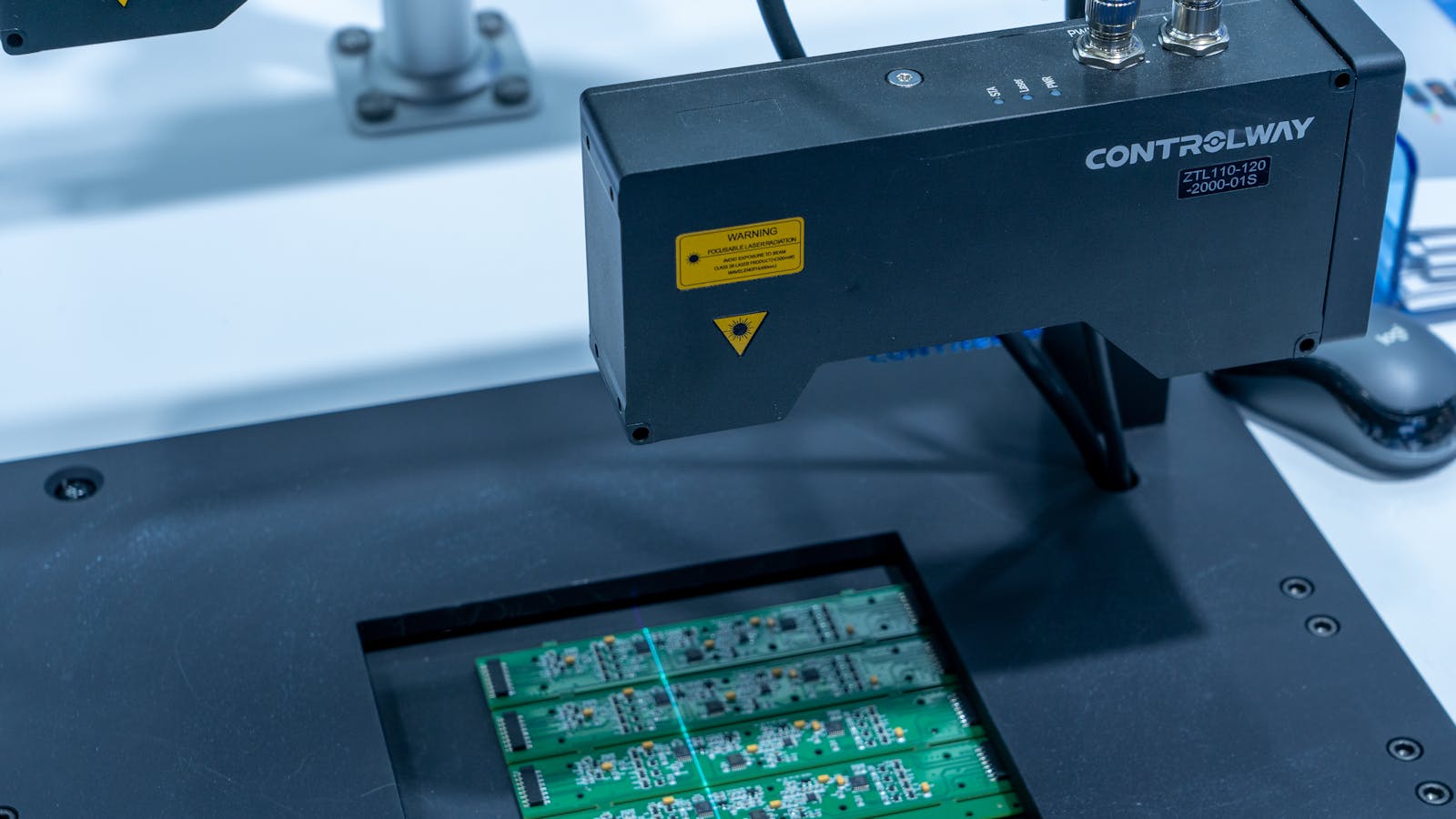
Main correspondence contents
- Automation of visual inspection, dimension measurement, positioning, and missing part detection
- Development of image processing algorithms using HALCON
- Cooperation with OCR, code reading, and traceability information
- Verification of classification and anomaly detection using AI and deep learning
- Connection design with cameras, lighting, PLC, and host systems
- Continuous support from PoC, evaluation, mass production introduction, and operational improvement
Suitable for situations like this
It is especially effective in sites where there are issues such as the inspection criteria being easily fluctuated by different people, the visual inspection process being a heavy burden, wanting to increase inspection speed, and wanting to keep a history of defective images. It can be applied to a wide range of processes such as electronic parts, resin molded products, printing inspection, packaging confirmation, and post-assembly checking.
On the other hand, in the field, it is also extremely important to “keep moving without stopping.” At Katotech, we aim to create a system that is easy to use even after installation, by designing not only for judgment accuracy but also for fluctuations in lighting conditions, camera position shifts, ease of operation, and ease of maintenance.
Flow from PoC to mass production introduction
First, check the target workpiece, inspection purpose, required accuracy, takt time, and site conditions, and decide which method is realistic. Then, through prototype evaluation and PoC, we will flesh out image acquisition conditions, judgment logic, necessary UI, and equipment coordination methods. In order to create a system that can be used for a long time, it is important to not only focus on accuracy at the initial stage, but also to create a design that can withstand operation.
Katotech doesn’t just develop software, we also handle fine-tuning and reviewing inspection conditions after installation. Since products and conditions change at the production site, creating a configuration that is easy to improve even after introduction will lead to results.
Proposals based on recent trends
In recent years, while expectations are high for generative AI and deep learning, there is also a focus on reproducibility, explainability, and maintenance costs in the field. Katotech proposes a balance that is reasonable for the field, such as keeping the configuration simple for areas that can be adequately covered by conventional image processing, and using AI to assist in difficult judgments.
In addition to simply displaying inspection results on the screen, we also place emphasis on a design that allows for log accumulation, image storage, linkage with higher-level systems, and analysis for quality improvement. As a result, the effects of introduction extend beyond the automation of inspection processes to continuous quality improvement.
Image processing software development
Our Hong Kong company provides image processing software development and on-site installation support in Japanese. You can consult with us in a manner that suits your practical needs, from sorting out inspection issues to prototyping and on-site application.
- Company Name
- Kato Information Technology Co,. Ltd.
- address
- Room 1309, Building 7B, Shenye Dongling, Huangbeiling Road, Huangbei Road, Luohu District, Shenzhen, Guangdong Province, China
- phone
- +852-2368-4673
- info@kato-tech.com.cn
- HP
- https://en.kato-tech.com.cn

